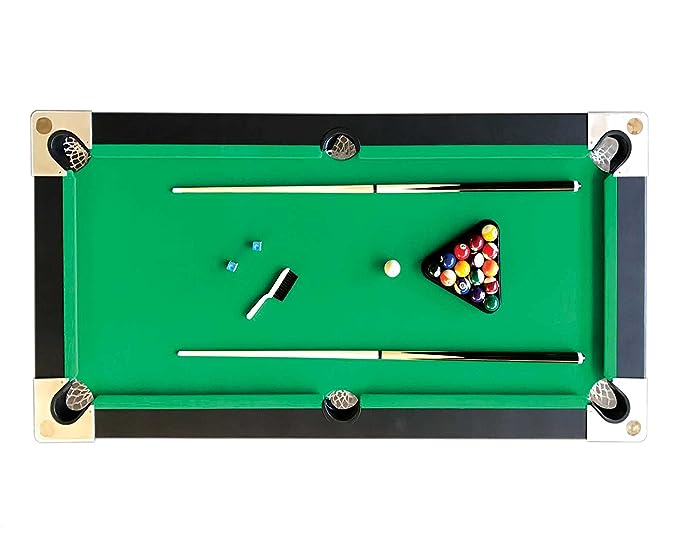
Game Setup:
Arrange a standard Billiards Pool table in a suitable indoor location, ensuring proper lighting and ample space around the table.
Players:
Two players or two teams take turns, each attempting to pocket their designated set of balls (solids or stripes) and finally the 8-ball.
Cue Sticks:
Provide quality cue sticks for players to use, ensuring they are appropriately sized and maintained.
Racking:
Place the 15 billiard balls in a triangular rack formation, with the 8-ball in the center and the apex ball on the foot spot.
Breaking:
Determine the breaker through a predetermined method. The breaker aims to strike the racked balls, dispersing them on the table.
Legal Break:
Ensure the break is legal, requiring at least four balls to hit the cushion and pocketing neither the 8-ball nor any balls from the designated set.
Turn Rotation:
After the break, players take turns attempting to pocket their designated set of balls in any order, followed by the 8-ball.
Legal Shots:
Players must strike their ball first during their turn, and each shot must result in a ball contacting a cushion or being pocketed.
Fouls:
Define common fouls, such as scratching (cue ball goes into a pocket), failing to hit a ball, or making illegal shots.
Scratch Penalties:
On a scratch, the opponent gets ball-in-hand, placing the cue ball anywhere on the table for their shot.
8-Ball Winning Shot:
Players must legally pocket all their designated balls before attempting to pocket the 8-ball to win the game.
8-Ball Loss:
Potting the 8-ball prematurely, scratching while potting the 8-ball, or committing a foul while potting the 8-ball results in a loss.